|
|
Last Modified on Oct 09, 2026
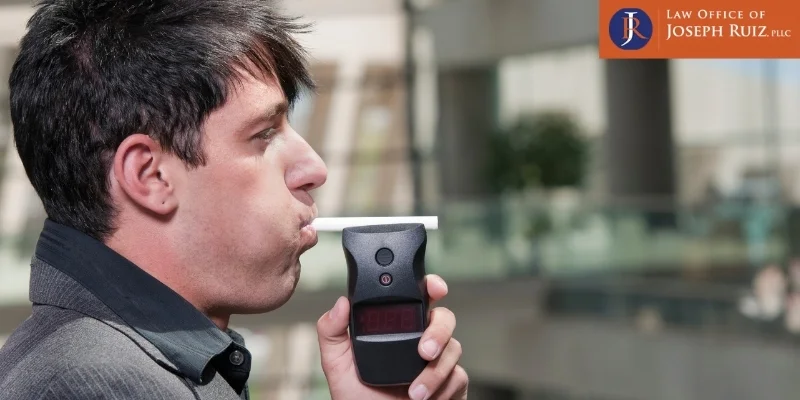
A breath test result can look definitive when an officer hands you a printout with a number on it.
In a Montgomery County DWI case, however, that number is only one piece of evidence, and the circumstances behind it can be examined.
The machine had to be properly maintained. The test had to be administered according to the required procedures. The officer had to be properly trained. The records supporting the result also have to withstand scrutiny.
A problem in any of those areas may give the defense a reason to challenge the breath test.
Law Office of Joseph Ruiz, PLLC brings a science-focused approach to DWI defense, including the examination of breath-testing evidence.
A free consultation can give you a clearer picture of what should be investigated before you make decisions about your case.
Key Takeaways
- A breath-test number is the product of a machine, a testing procedure, and an operator. Each part can be examined for errors or irregularities.
- Misdemeanor DWI cases in Montgomery County are handled through Courts at Law 1, 4, and 5, while felony DWI-related charges proceed through the county’s district courts.
- Texas requirements concerning breath-testing instruments, certification, operation, and admissibility can provide several avenues for challenging the state’s evidence.
- A separate administrative license-suspension process can move quickly after a DWI arrest, so the criminal case and driver’s license issue need to be addressed on their own timelines.
- Reviewing calibration records, maintenance information, operator credentials, and testing records can reveal issues that are not apparent from the final breath-test printout.
The number on the report is not the end of the analysis. Before deciding how to respond to a DWI charge, it is worth having the underlying evidence reviewed by an attorney who knows what to look for.
Why a Montgomery County Breath Test Can Be Questioned?
A breath test does not directly measure the amount of alcohol in your blood. It analyzes alcohol in a breath sample and uses that measurement to estimate a blood alcohol concentration.
That process involves assumptions about how alcohol moves between the blood and the breath. It also depends on the condition of the instrument and the way the sample was collected.
That gives the defense several areas to investigate.
A lawyer reviewing your case may examine the particular instrument used, its maintenance and certification history, the officer’s training, the testing sequence, the observation period, and the records generated during the test.
The goal is not to assume the machine was wrong. It is to determine whether the State can support the number it wants to use against you.
Where a Montgomery County DWI Case Is Heard?
The court handling your DWI depends in part on the level of the charge.
- First- or second-offense DWI: These misdemeanor cases are handled in Montgomery County Courts.
- Third-offense DWI and certain felony intoxication offenses: Charges such as intoxication assault and intoxication manslaughter can proceed in Montgomery County district court.
- Administrative license suspension: The driver’s license issue is handled separately through the Texas Department of Public Safety and follows its own deadlines.
Knowing which court has your criminal case is only part of the picture. The administrative license proceeding can require action on a much shorter timetable. For a broader look at the process, see what to expect after a DWI arrest in Montgomery County.
What an Attorney Examines Behind the Breath-Test Number
The printout you receive does not tell the whole story. A meaningful review goes back to the records and procedures that produced it.
The Instrument’s Certification and Maintenance
The breath-testing instrument must satisfy Texas requirements before the State can rely on its results.
That makes the machine’s records important. An attorney can examine the instrument’s identification, certification information, calibration records, maintenance history, and other documentation associated with its operation.
The question is whether the State can establish that the particular instrument used in your case was properly approved and functioning within the requirements that apply to it.
The Officer’s Training and Testing Procedure
The person administering the test matters, too.
The officer’s training and certification records can be reviewed alongside the reports describing what happened before and during the test.
The required observation period, the testing sequence, and compliance with applicable procedures may all become relevant when determining whether the result should be admitted.
A discrepancy in the paperwork may be minor. It may also provide the defense with a basis for a much more significant challenge. That is why the underlying records need to be reviewed rather than relying only on the number printed at the end.
Conditions That Can Affect a Breath Sample
Breath-testing evidence can also raise scientific questions about the sample itself.
Issues involving residual mouth alcohol, reflux, body temperature, or other physiological factors may become relevant depending on the facts of the case and the scientific evidence available.
The important point is that a breath-test result should be evaluated in the context of how the sample was obtained and what the instrument actually measures.
Texas Law Provides Ways to Challenge Breath-Test Evidence
A DWI prosecution does not become conclusive simply because an officer obtained a breath-test result.
Texas law governs the circumstances under which breath-test evidence may be used in a criminal prosecution.
Texas Transportation Code Chapter 724 addresses implied consent and related procedures, while the Texas Penal Code defines the DWI offense and other intoxication-related crimes.
A defense attorney can examine whether the State can establish the necessary foundation for the breath result.
Depending on the evidence, that may involve challenging the admissibility of the result, questioning the operator’s compliance with testing requirements, examining the instrument’s records, or disputing whether the State can prove intoxication under the applicable DWI statute.
The defense does not have to accept the breath-test number as an established fact simply because it appears on a report.
A Forensic Lawyer-Scientist Can Approach the Evidence Differently
Joseph Ruiz holds the American Chemical Society’s Forensic Lawyer-Scientist designation. His approach to breath-test evidence combines legal analysis with an understanding of the scientific principles involved.
That matters because the important information may not be contained in the final number.
Calibration records, instrument documentation, operator certification, testing records, and the circumstances surrounding the sample can provide a much fuller picture.
Reviewing those materials can help determine whether the reported result is supported by the evidence the State would need to present in court.
What a Successful Breath-Test Challenge Could Mean
Challenging a breath test does not guarantee a particular result. It can, however, change the evidence available to the prosecution.
If the breath result is excluded or substantially weakened, the State may have to rely more heavily on other evidence, such as an officer’s observations, field sobriety testing, statements, video, or other circumstances surrounding the arrest.
That can affect how the case is evaluated and how prosecutors approach the charge. In some cases, the evidence may support a different resolution. In others, the case may still proceed based on the remaining evidence.
The only way to assess that realistically is to examine the complete file.
Frequently Asked Questions
Can I challenge a breath test in Montgomery County?
Yes. The defense can examine the instrument, its certification and maintenance records, the officer’s qualifications, the testing procedure, and the circumstances surrounding the breath sample. Depending on what the investigation reveals, an attorney may challenge the admissibility or reliability of the result.
Can a breath test be wrong even if the machine produced a number?
A machine producing a number does not by itself establish that the number accurately represents your alcohol concentration. The reliability of the result depends on the instrument, testing conditions, procedures, and other evidence surrounding the test.
What happens if the breath test is excluded?
The State may still have other evidence of intoxication. That could include officer observations, field sobriety tests, video, statements, or other evidence. Excluding the breath result can therefore change the prosecution’s case without automatically ending it.
Can I refuse a breath test in Texas?
You can refuse a requested breath test, but refusal can create separate consequences under Texas implied-consent laws, including an administrative driver’s license suspension. In some circumstances, officers may also seek a warrant for a blood specimen.
How long do I have to request a hearing on my license suspension?
The administrative license-revocation process has a short deadline. Texas DPS states that a person generally has 15 days after receiving notice of suspension to request an administrative hearing. Waiting beyond the deadline can affect your ability to contest the suspension.
Will challenging the breath test mean my DWI case goes to trial?
Not necessarily. A breath-test challenge is part of the defense strategy, not a commitment to trial. Once the evidence has been reviewed, the parties may consider different resolutions based on the strength of the remaining case.
Get Your Montgomery County Breath-Test Evidence Reviewed
A breath-test report may give you one number, but it does not explain everything that happened before that number appeared.
The important questions are in the records behind it. Was the instrument properly maintained? Was the officer properly trained? Were the required procedures followed? Does the State have the documentation needed to support the result? And what other evidence remains if the breath test is challenged?
The Law Office of Joseph Ruiz, PLLC can review those issues with you before you make decisions about your DWI case. With more than 325 jury trials of experience, the firm approaches DWI defense by examining the evidence rather than assuming the State’s version is complete.
Contact the firm to schedule a free consultation and discuss what the breath-test records may show about your Montgomery County case.