
How Does a Self-Defense Case Work in Texas?
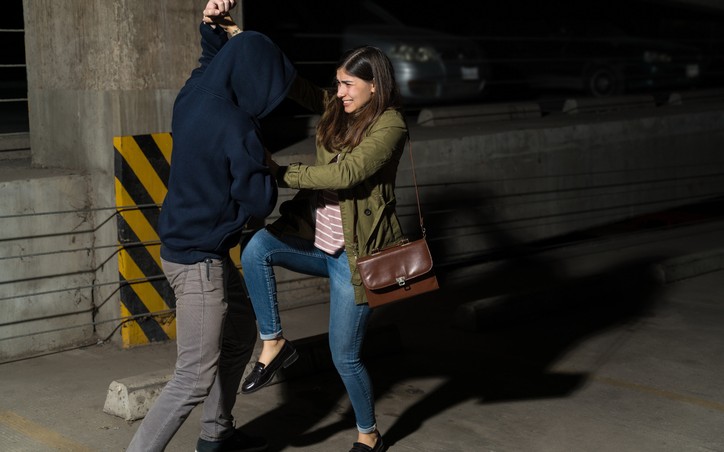
Not every fight leads to a conviction. Sometimes defending yourself isn’t just understandable — it’s legal.
In a recent self-defense case, Houston criminal defense attorney Joseph Ruiz represented a client who was charged with assault after a bar fight. What looked like a simple altercation became a powerful example of how Texas law protects individuals who act to defend themselves.
The case began when the client was confronted at a pub by another man over a personal dispute. Words escalated. The other man was prepared to strike. Faced with an imminent attack, the client punched first to stop the threat. The aggressor walked away with a broken nose and a black eye. When police arrived, conflicting stories were told, but only one person had visible injuries.
That person was not Joseph Ruiz’s client. Yet he was the one charged with assault.
If you are facing similar charges, it is critical to speak with an experienced Houston criminal defense attorney at Joseph Ruiz Law immediately to protect your rights and preserve key evidence.
What Must Be Proven in a Texas Self-Defense Case?
Under Texas Penal Code Sections 9.31 and 9.32, four elements must be established to justify self-defense:
1. Reasonable Belief of Danger
The defendant must have reasonably believed they were in danger of unlawful harm.
In this case, multiple witnesses confirmed the aggressor was about to throw a punch. The jury had to consider whether a reasonable person in that moment would believe force was necessary.
2. Immediate Necessity
Self-defense applies only when the threat is imminent, not speculative or retaliatory.
The law does not require someone to “wait and see” if they will actually be struck. The danger must be happening in real time.
3. Proportional Response
The force used must match the threat.
Here, the client used his fist to stop a fist. He did not escalate the encounter by introducing a weapon. Proportionality is often the deciding factor in a self-defense case.
4. No Duty to Retreat (Stand Your Ground)
Texas law does not require a person to retreat if:
- They are lawfully present
- They did not provoke the encounter
- They are not engaged in criminal activity
Because the client was lawfully at the bar and did not start the fight, he had the right to stand his ground.
Why Admitting the Act Can Be Strategic in a Self-Defense Case
One of the most misunderstood aspects of a self-defense case is this:
You must admit to the conduct.
To receive a self-defense jury instruction, the defense must create what’s called a “fact issue.” Often, this requires the client to testify and admit to the act (the punch) — but assert it was legally justified.
That admission shifts the burden to the prosecution. Once self-defense is properly raised, the State must prove beyond a reasonable doubt that the defendant did not act in self-defense.
If the jury has a reasonable doubt?
The verdict must be Not Guilty. That is exactly what happened in this case.
What Should You Do Immediately After Acting in Self-Defense?
If you believe you acted in lawful self-defense:
- Document everything immediately.
- Take photos of the scene and any injuries.
- Get witness names and contact information.
- Preserve any video evidence.
- Contact a criminal defense attorney before making detailed statements.
Early intervention can determine whether your case results in dismissal, acquittal, or conviction. The team at Joseph Ruiz Law focuses on strategic early investigation to secure favorable outcomes in complex self-defense cases.
Frequently Asked Questions About a Self-Defense Case
Is self-defense automatically accepted in Texas?
No. You must present evidence supporting each legal element. Simply claiming self-defense is not enough.
Can you hit someone first and still claim self-defense?
Yes, if you reasonably believed an attack was imminent, and force was immediately necessary.
Who has the burden of proof in a self-defense case?
Once properly raised, the prosecution must prove beyond a reasonable doubt that the conduct was not self-defense.
Do you have to testify?
Not always, but in many self-defense cases, testimony is the most direct way to create the required fact issue for a jury instruction.
Why Experience Matters in a Self-Defense Case
Self-defense law sounds straightforward on paper. In practice, it requires:
- Strategic admission of conduct
- Careful jury charge preparation
- Witness corroboration
- Effective cross-examination
- Precise understanding of Texas Penal Code 9.31 and 9.32
Joseph Ruiz has seen firsthand how juries evaluate these cases. Visible injuries do not determine guilt. Legal justification does.
If you or someone you know is facing charges involving a potential self-defense case, do not wait. Contact us today for a free consultation.
The law protects those who act reasonably to defend themselves — but only if the defense is properly presented.

Schedule A Consultation
Fill out the form below to get in Touch


© Copyright 2026 Law Office of Joseph Ruiz, PLLC All rights reserved.
*Images are obtained under license from Canva and other third-party stock image providers, with attribution included where required.
Digital Marketing By 